Your business requires regular cleaning scheduled according to potential hazards, food processing capacity, allergen concerns, and regulatory checks, plus verification documentation demonstrating HACCP compliance, inspection results, and government health requirements. The information below detail essential sanitation program components.
Key Takeaways
- Sanitation experts from Brampton assist restaurants, grocery departments, commissaries, warehouses, bakeries, schools, mobile vendors, and allergen-sensitive operations.
- They disinfect high-touch surfaces, food-contact equipment, kitchens, floors, drains, restrooms, and storage areas using sectional methods to avoid cross-contamination.
- Filing of finalization through samples, inspections, and remedial documentation confirms approved contractors have verified approved sanitizer dilution, appropriateness, and contact time.
- Hygiene plans need to adhere to risk, throughput, changeovers, spills, and regulations, with everyday, recurring, and annual duties distributed by location.
- Emphasize contractors exhibiting hazard analysis knowledge, health regulatory expertise, WHMIS education, insurance, endorsements, colour-coded implements, and compliance-ready sanitation files.
Brampton Venues That Need Food Safety Cleaning: Which Ones?
You must follow food safety cleaning if your establishment is falls under health department oversight, food standards, or HACCP requirements. This covers dining establishments, employee cafes, distribution hubs, market sections, meat shops, fish stands, retail outlets, and food service kitchens.
You also need compliant food safety cleaning in warehouses, food manufacturing plants, cold storage sites, retail bakeries, school nutrition programs, banquet halls, and meal delivery hubs. Mobile and seasonal operations count too, including food trucks, event vendors, and temporary booths. If your staff process ingredients, portion ready-to-eat items, reheat products, or store allergens, your facility needs written cleaning standards. In Brampton, cleanliness isn't discretionary; it's part of statutory, business, and public health compliance.
What Do Brampton Cleaning Professionals Handle?
Professional cleaning teams specializing in Brampton disinfect high-contact surfaces, food preparation areas, ground surfaces, and restrooms to satisfy food safety standards and health requirements. Emphasis on these spaces stems from extreme cross-contamination risk, injury hazards, and possible regulatory violations.
Knowing their service areas enables you to validate your facility's cleaning meets operational demands and regulatory compliance.
Addressing High-Touch Surface Cleaning
Managing high-touch surface sterilization is vital for Brampton maintenance experts because these surfaces can transmit harmful organisms and food particles within a facility. You must have a scheduling system for sterilizing door handles, push plates, switches, railings, shared equipment controls, POS terminals, and refrigerator pulls. Implementing touchpoint mapping, experts identify every high-traffic surface and assign cleaning frequency
through rotating cleaning materials, following unidirectional processes, and keeping disinfection tools separate by location
Kitchens, Floors, and Restrooms
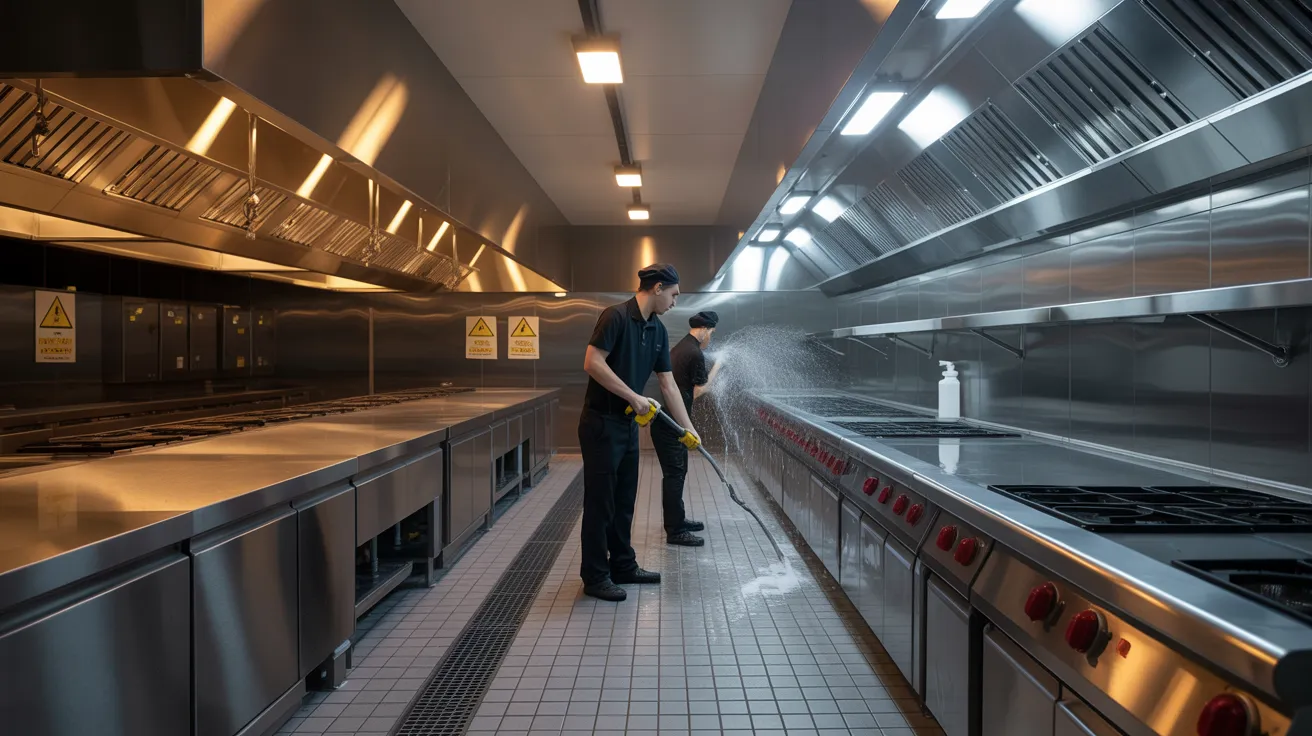
Expect Brampton cleaning experts to focus on kitchens, floors, and restrooms because each area carries unique food safety, slip-and-fall, and sanitation risks. In industrial kitchens, you need degreasing on cook lines, equipment exteriors, drains, prep surfaces, and splash zones to reduce contamination and pest pressure.
Floor care that is recorded should also be anticipated. Technicians clean and remove buildup from tile grout, ceramic surfaces, and vinyl floors, then apply appropriate drying controls so you can reduce slip incidents and maintain code-compliant conditions. They also handle entryways where moisture and debris migrate indoors.
For restroom sanitation, cleaners disinfect touchpoints, fixtures, partitions, dispensers, and waste containers, then replenish amenities and manage odor. They also maintain restaurant cleaning supply rooms where product storage, sink cleanliness, and drain systems impact daily sanitation standards and worker protection.
Why Food Safety Cleaning Matters in Brampton
In Brampton, you must copyright food-safe cleaning standards to meet health code requirements and achieve compliance. You also reduce bacterial spread through proper cleaning of food-preparation surfaces, appliances, and frequently-touched items. Most importantly, you safeguard community wellness by reducing the chance of food poisoning in your establishment.
Regulatory Code Requirements
Since Brampton food operations must follow mandatory safety protocols, your food safety cleaning directly impacts your competence to adhere to health codes, ensure the safety of diners, and prevent regulatory penalties. You must maintain clean food preparation areas, documented cleaning schedules, proper chemical use, and documented employee protocols that meet municipal and provincial inspection expectations.
When cleaning standards slip, citations, corrective orders, brand harm, and service suspension from additional reviews or enforcement actions become risks.
Cross-Contamination Control
Maintaining regulatory compliance copyrights on your power to stop cross-contamination during daily food handling and cleaning. You must separate raw ingredients from ready-to-eat foods, sterilize work zones between assignments, and store chemicals away from food-contact items. Clear procedures reduce transfer risks and support consistent compliance during inspections.
Implementing allergen separation helps ensure major allergens don't touch communal work zones, bins, or devices. Utilize separate boards, color-labeled items, and clear tool marking so workers don't combine products while preparing or distributing. Enforce hand hygiene following raw meat, seafood, eggs, or allergen-containing products. Replace wiping cloths regularly, and verify sanitizer strength with test strips. When you train staff to follow these controls every shift, you establish a more hygienic, safer workplace that satisfies Brampton's food safety needs daily.
Public Health Protection
If proper sanitation declines, you don't merely face potential inspection issues—you amplify the risk of foodborne illness harming customers, staff, and the broader Brampton region. You also undermine your responsibility in safeguarding community wellness, especially in high-traffic food premises where contamination can spread quickly through surfaces, equipment, and touchpoints.
You depend on sanitation protocols that eliminate contaminants, effectively sanitize, and verify results. This entails adhering to exposure times, utilizing authorized sanitizers, recording schedules, and training employees to meet compliance standards. These actions support disease prevention by reducing microbes before contaminating food or hands. In Brampton, robust sanitation protects at-risk groups, minimizes disease spread, and proves your diligence. When you adhere to proper protocols, you go beyond regulations—you meaningfully lower danger and promote secure food service across the region.
How Can Cleaning Practices Ensure Food Safety Compliance?
Maintaining comprehensive cleaning schedules ensures food safety compliance by minimizing contamination hazards, managing pathogen expansion, and keeping your facility in accordance with sanitation requirements under HACCP-based programs and public health regulations. You confirm that food-handling surfaces are visibly clean and microbiologically controlled, supporting documented preventive controls and inspection readiness.
Effective cleaning also strengthens allergen control by removing residues that can lead to undeclared allergen exposure. by eliminating residues that can provoke undeclared allergen exposure.
What's the Right Time to Plan Commercial Cleaning?
maintenance activities.
You should also arrange periodic tasks separately
What Should You Look For in Brampton Cleaning Experts?
Begin by evaluating providers based on sanitation compliance standards—not solely on price alone. You should confirm that each organization comprehends CFIA, public health, and HACCP-based requirements applicable to your facility. Request insurance certificates, WHMIS compliance, staff training documentation, and oversight procedures. Assess whether technicians recognize cross-contamination risks, chemical handling protocols, and verifiable sanitation records.
Additionally, you need to evaluate operational reliability and responsibility. Obtain references from food facilities in Brampton, then review service speed, corrective-action procedures, and communication standards. Verify the company conducts supplier reviews and can deliver compliance-ready records when inspectors or external parties need proof. Verify equipment upkeep, colour-coded tools are applied correctly, and site-specific hazards are identified. A capable service ensures compliance, product integrity, and your brand reputation.
What details should a Food Safety Cleaning Plan include?
Create a documented strategy that clearly outlines every sanitation task, standard, and responsibility prior to beginning production. You should list cleaning schedules, authorized products, mixing ratios, exposure periods, equipment, and testing procedures for each area, section, and machine. Be sure to include pre-operational inspections, corrective actions, and employee training requirements.
Your framework should also cover cross-contamination controls, waste handling, pest-prevention measures, and documented schedules for restrooms, drains, floors, and food-contact areas. Clarify how you'll separate raw and ready-to-eat processes, help with ingredient tracking, and maintain accurate allergen labeling through validated cleaning between product changes. You should establish accountability, maintain signed records, and check results against regulatory standards, HACCP controls, and customer requirements. When gaps appear, revise procedures immediately and re-educate staff.
Regular Posed Inquiries
Will cleaning services manage nighttime hours at Brampton facilities?
Yes, you can arrange sanitation coverage to manage overnight shifts in Brampton facilities. You'll organize overnight sanitation around production schedules, access controls, and staffing requirements. Providers typically establish overnight logistics to reduce disruption, ensure compliance, and document completed tasks. You should confirm arrival timeframes, supervision, lockout procedures, and disposal methods before beginning service. If you operate regulated spaces, you'll also want cleaning records that enable audits and internal quality assurance.
Do sanitation professionals offer hazard containment solutions?
Yes, you can expect Brampton cleaning experts who provide emergency spill response solutions. They manage hazardous materials, assess risks, isolate affected areas, and begin swift cleanup to minimize risk and avoid operational disruption. You should verify arrival timeframes, training certifications, safety procedures, and waste management. If your facility must comply with industry standards, select a service that documents incidents, maintains regulatory procedures, and supports audit readiness.
Do eco-friendly disinfectants perform safely on food-handling equipment?
Yes, natural disinfectants can be appropriate for food-handling equipment if you select items marked food-safe similar information and regulatory compliant. You should confirm exposure duration, mixing proportions, and rinsing needs before application. Many botanical formulations lower chemical hazards, but you still need demonstration of efficacy against target microorganisms. To maintain residue free surfaces, you should adhere to precise manufacturer instructions and ensure the disinfecting agent meets food sanitation requirements.
Can sanitation programs adjust with seasonal production changes?
Yes, you can tailor maintenance plans for seasonal production changes. You should modify frequencies, staff levels, chemicals, and validation steps to correspond to seasonal workflows while preserving compliance standards. You'll reduce equipment downtime by scheduling sanitation around equipment transitions, high demand periods, and usage cycles. You should additionally update standard operating procedures, staff education, and environmental monitoring to capture temporary risks, novel allergens, or increased soiling. Continuous reviews keep your plan functional.
Do commercial cleaners educate employees on hygiene standards?
Absolutely, professional cleaning companies frequently provide employee education on sanitation best practices. Your team receives instruction on proper chemical use, contact times, contamination avoidance, machine takedown, and paperwork. They typically align guidance with HACCP, GMP, and CFIA or local public health standards. Many conduct health inspections to ensure adherence, pinpoint weaknesses, and reinforce corrective actions. This helps you maintain uniform standards, clear audits, and lower contamination dangers routinely.
Closing Remarks
When you partner with Brampton commercial cleaning and food safety experts, you aren't merely cleaning—you keep your operation inspection-ready and your protocols above board. From processing areas to kitchen spaces, every polished surface and well-kept corner helps reduce unwelcome guests and prevent costly setbacks. By scheduling service at the proper frequency and following a clear cleaning plan, you safeguard staff, customers, and your reputation. In a strict regulatory setting, clean spaces aren't optional—they're part of doing business right.